Saturday, June 16, 2007

Chinese activists plan protest in front of Japanese Embassy


June 10, Narita Airport - A Chinese man named Xue Yi (薜义) has been taken into custody for throwing two plastic bottles at Lee Teng-hui and his wife, following Lee's visit to Yasukuni Shrine and reiterated support for Taiwanese independence. Not surprisingly, Bi Yi's detention has sparked anger among Chinese netizens on nationalist forums. But news of the incident has also received coverage on official internet portals, some of which have drawn parallels to a similar incident in 2001, when overseas Chinese student Feng Jinhua defaced the entrance to Yasukuni Shrine. Feng Jinhua was given a hero's welcome upon his return to Beijing and is now one of the core leaders of the China Federation for Defending the Diaoyu Islands.

Late last night, I received an SMS saying that there will be a protest Monday morning at 10 A.M. in front of the Japanese Embassy. If the demonstration even comes to fruition, it's unlikely that the event will be large. If not, it will simply join the scrap heap of would-be protests.

Monday, June 11, 2007

Homemade yogurt

While in Xinjiang, I fell in love with homemade yogurt. I've always been partial to yogurt, especially when mixed with mango pulp to create the delectable mango lassi, my favorite Indian yogurt drink and the inspiration for my screen identity, mangolass. (News flash: following a trade agreement with India, three new varieties of mangoes will be on sale in California this summer!)

But Dannon, Yoplait and even Horizon Organic cannot compare with the experience of eating yogurt in Xinjiang: thick, semi-separated curds, good for dipping bread, flavoring rice pilaf, or with a spoonful of sugar, the way I like it. Beijing yogurt has a nice consistency, but the preservatives give it an off-taste. Even the freshly made yogurt at our favorite Xinjiang restaurant, run by the Urumqi City Government Office, seemed thin and watery by comparison.

What to do? Make my own!


I'd tried once before, but with miserable results. This time I beefed up on incubation techniques and starter cultures. Several hours later - voila! Delicious, creamy yogurt - served right from the rice cooker, my stand-in yogurt incubator.


References:
Easy, the Indian way: http://www.nandyala.org/mahanandi/archives/2005/06/23/home-made-yogurt/
A little fussy:
http://www.treehugger.com/files/2005/12/easy_homemade_y.php
Getting scientific: http://biology.clc.uc.edu/fankhauser/Cheese/yogurt_making/YOGURT2000.htm


Saturday, June 09, 2007

Xiamen protests

Residents of the wealthy coastal city of Xiamen turned out on June 1st and 2nd to protest the proposed construction of a petrochemical plant. Cellphone text messages circulated for days before the protest. Having thrown a bone to the protesters by saying that it would consider pulling the project, the government appears to be cracking down now. But one man has already caught the brunt.

Xiamen mayor Liu Cigui told reporters: “There are some people who have taken advantage of the people's attention to environmental issues, attention to this project, and taken inappropriate and even illegal actions."
According to the SCMP:
Rumours circulated that at least one person suspected of being a ringleader of peaceful marches was arrested at his home early yesterday.
Who was this man?

During the protest, citizen-blogger Cloudswander spotted a man at the head of the march wearing a Bao Diao t-shirt. It appears that this man is named Li Yiqiang (李义强), former head of the Xiamen branch of the China Federation for Defending the Diaoyu Islands.


Photos taken by Cloudswander

According to a fellow activist, Li Yiqiang was taken into custody on June 3rd and has not been released yet.

It also appears that Li Yiqiang acted on his own, without telling other Bao Diao activists of his plans. In fact, Li Yiqiang fell out with the CFDD following the March 2004 landing of seven Bao Diao activists on the Diaoyu/Senkaku Islands, which garnered fame for the participants but earned the enmity of the government, especially the Ministry of Foreign Affairs.

Related links:

2004 photo of Li Yiqiang

Tuesday, June 05, 2007

Xinjiang


I end my long hiatus from blogging with photos of my Xinjiang trip here.

Saturday, January 20, 2007

Beijing

Driving in a taxi from the airport, I marveled at how much like "home" Beijing has come to seem. Even the apartment, despite layers of dust and coal grit, felt like an old friend. The dumplings, gongbao jiding (Kungpao chicken), and vegetable stir-fry delivered for 28 yuan from our favorite neighborhood restaurant were just as tasty as I had remembered.

Unfortunately, I've come down with a sore throat and will be lying low today.

Thursday, January 11, 2007

Hong Kong

All fall, I ate as little Chinese food as possible in order to prepare for my next six-month stint in China. A week in Hong Kong, and I'm already craving a big salad (preferably with currants, crumbled cheese, and candied walnuts). Not that the dim sum hasn't been delicious. But my palate is proving more stubborn than my circadian rhythms.


The first few days were made much more enjoyable by Josephine's visit from Taiwan. In under 48 hours, we visited the Peak, rode the Star Ferry, saw the light show, rode the mid-level escalators, feared for our lives on a double decker-bus, ate dim sum twice, took high tea at the Mandarin Oriental and dinner at the Peninsula, ferried to an outlying island and caught a gauzy sunset over the fishing village, ordered scallops and prawns from the tank and licked the garlicky juices from our fingers. Altogether a wonderful whirlwind visit.


Photo of an intrepid bicyclist, out of place on Hong Kong's orderly streets.

Tuesday, December 19, 2006

Winter Cabbage

Beijing Journal

Crowding People’s Market for Cabbage: The Price Is Right

By JIM YARDLEY
Published: December 19, 2006

BEIJING, Dec. 18 — At 5:45 in the morning the cabbage line outside the Old Drum Tower Outer Street New People’s Produce Market is nearly two hours old. First in line is a 72-year-old woman named Mrs. Wang, who awoke at 3, arrived at 4 and would wait until 8:30 for a single head of winter cabbage. Free.

Doug Kanter for The New York Times

Beijing’s winter produce markets are overrun with a bumper crop of cabbage this year, so a worker at the Old Drum Tower Outer Street New People’s Produce Market hands them out free, one to a customer, as a promotion.

Doug Kanter for The New York Times

The line begins forming early in the morning.

Cabbage, or bai cai, costs about 4 cents a head, so Mrs. Wang’s prize was not quite a free refrigerator. She did not mind. Nor did another retired matron who passed the time singing patriotic tunes and a shaky but enthusiastic English rendition of “Baa Baa Black Sheep.” And neither did two elderly combatants who shouted at each another in unprintable Chinese for inexplicable reasons.

“They are just fighting because they have nothing better to do,” explained Mrs. Wang, who declined to provide her first name. “We all know each other. We’re all old neighbors.”

Cabbage and old people are civic institutions in Beijing. Winter brings them together. For generations cabbage has arrived in markets by November, and Beijingers have hoarded it as an insurance policy to last them until spring, depending on the outdoor refrigeration of rooftops or windowsills. Cabbage and turnips were the staples that saw people through the uncertain harvests and aching poverty of the Mao era.

But Beijing’s winter markets are now overrun with enough fruits, vegetables and meats that cabbage, if still widely used, has become as unglamorous as old people — except to old people.

The predawn line outside the Old Drum Tower market represents a marriage of convenience: market managers give away cabbage to attract hordes of fixed-income old people in hopes that the spectacle will attract the curiosity of younger, more affluent morning commuters.

“It’s a win-win situation,” said Zhang Pinsheng, 68, a retired teacher. “The market doesn’t have to spend money on advertising, and we don’t have to spend money on cabbage.”

They do have to wait in freezing predawn temperatures to collect a chunk of greenery of almost no value — or, for that matter, of almost no taste without sauce.

This year farmers grew so much cabbage that prices dipped to record lows in November, with markets charging only a few pennies a head. Even so, when the Old Drum Tower market introduced its cabbage promotion in late November, the daily line soon stretched under two overpasses and past a new luxury hotel.

“If they were going to give away fish or eggs, the line would stretch all the way to Qianmen,” a neighborhood several miles away, said Li Bao, a vendor at the market. “People would start lining up at midnight.”

The incentive for the hundreds of people who come each day is a blend of need, habit, boredom and a desire for companionship. Several people described lives on the margins. Some were retired; others lost their jobs in the changing economy; others depended on minuscule urban pensions. Mrs. Wang said she did not watch television in her apartment, because “the TV uses electricity.”

Mr. Zhang, the retired teacher, said the free cabbage “doesn’t really solve the basic problems you have, but it can help a little.”

“You aren’t going to get rich collecting free cabbage,” he said. “My life is pretty average. We don’t worry about food or clothes. You’re never really full, but you are never going to go hungry.”

Inflation has ticked upward in recent months, and the rising cost of some foods, as well as cooking oil, has brought some anxiety. Recently, Prime Minister Wen Jiabao visited an elderly Beijing woman to offer a public reassurance that the government would fight rising prices.

Cabbage, often used as filling for the steamed dumpling so popular in Beijing, seems mostly immune to inflation, though, and some people admitted that the line here was as much a social event as an economic necessity.

Many retirees in Beijing have limited resources and unlimited time to fill, so they congregate in city parks to practice tai chi or ballroom dancing, or just to talk. Another popular pastime is admonishing parents, including strangers, whose children are deemed to be insufficiently clothed — say, less than five layers — in wintertime.

But a few hours in line can also provide entertainment for people inured to hardship and tedium by a few decades of Communism. “It doesn’t matter if I get a cabbage,” said one man, who like several people declined to give his name. “It’s a nice day and I’ve got nothing to do.”

Another woman with a toothy smile and a pink coat agreed. “We have nothing better to do,” she said. “We go for a walk in the morning. We get in line, and we pick up some cabbage.”

Zhang Hongwei, 27, one of the managers at the market, said the cabbage promotion would last two months. He said that most people in line were not buying other vegetables but that their presence “is good advertising and attracting others.”

“If they weren’t here they would just be walking around in parks,” he said. “And it is a tradition in Beijing to store cabbage in the winter. They need to get their cabbage.”

A certain regimen oversees the process. Regulars arrive early, occasionally shoo newcomers into a single-file line and snatch up the laminated tickets handed out by the market to ensure order. Many people bring cushions for comfortable sitting. Line breakers are barked down.

The magic moment comes promptly at 8:30. On this recent day, a manager began collecting the tickets. Another clerk popped open the rear hood of a white van to reveal green stacks of cabbage. Distribution was methodical — perhaps to drag out the advertising as commuters rushed into a nearby subway stop.

Mrs. Wang collected her cabbage with a satisfied smile. She stuffed it into a plastic bag and walked quickly down the sidewalk, oblivious to the cold.

“To be a little cold for a cabbage is not a big deal,” she said. “Cabbage is delicious.”

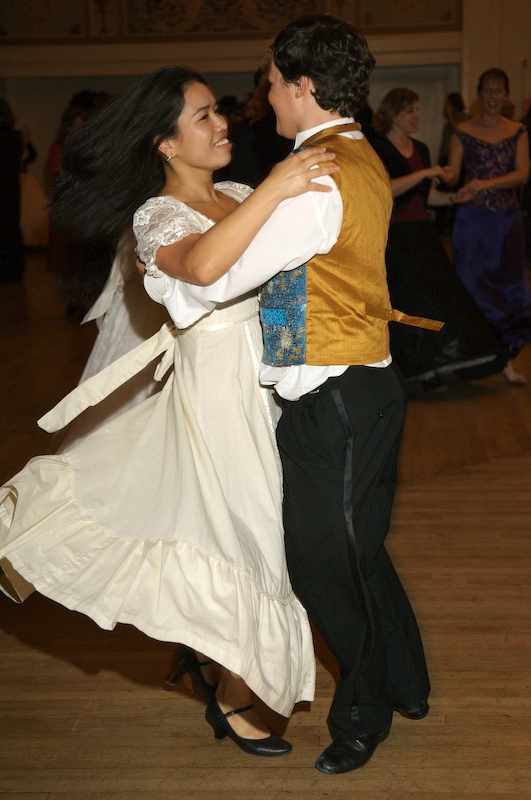
Ye Gaskells Ball

One of my favorite places to waltz, polka, and generally get gussied up: Ye Gaskells Ball in Oakland, CA.


Thanks to Matt Rollefson for the photos.

Sunday, October 29, 2006

I'm a proud parent

of FACES (Forum for American/Chinese Exchange at Stanford), which has continued to grow tremendously since I handed over the reins in 2003. Here's the Stanford Daily article about FACES that ran on Thursday:

Campus to host FACES conference
October 26, 2006
By Emma Vaughn

As U.S.-Sino relations grow in importance in the global community, the Forum for American/Chinese Exchange at Stanford (FACES) is actively working to promote diplomacy and friendship between the nations’ younger generations.

With three chapters in China and host more than 50 delegates from around the world, FACES is a student-run program dedicated to fostering grass-roots diplomacy and improving ties between Chinese and American students.

“It is basically like having an NGO based at Stanford,” said 2003 graduate Jessica Weiss, who founded FACES in 2001. “Yes, it’s run by students, but it has a strong air of professional organization.”

The capstone efforts of FACES are two projects that brings together American and Chinese student-delegates to discuss U.S.-Sino relations with some of the field’s leading experts.

Shanghai will host the first of these weeklong conferences Nov. 8, and Stanford will hold a second conference in April.

“The annual conferences are really what make FACES different,” said Xiaodong Chen, a graduate student in Management Science and Engineering and Chinese delegate to FACES. “They are of the highest quality in terms of the speaker’s credentials and international influence. They also include a highly selective application process, which guarantees the brightest minds from both countries. The staff are extremely dedicated, hardworking and helpful.”

Richard B. Levin, president of Yale University and a featured speaker at the Shanghai conference, said that organizations like FACES will have a large impact on the global community.

“The security of the planet will require that the future leaders of China and the United States have a bond of mutual understanding,” Levin told The Daily. “By bringing together college students from leading universities with a serious interest in U.S.-China relations, FACES is contributing in an important way to the education of future leaders and, thereby, to international security.”

Delegates to the conference are chosen from a pool of nearly 600 students and come from both American universities such as Harvard, Brown, Duke, Yale and also from Chinese universities like Peking, Tsinghua and the University of Hong Kong.

The goal of these conferences is to bring students in contact with business executives, policymakers and educational figures who can talk about China’s increasing economic and political influence. Previous conference speakers have included William Perry, President Bill Clinton’s defense secretary who also works at Stanford, Zbigniew Brzesinksi, President Jimmy Carter’s national security advisor, and Robert Kapp, former president of the U.S.-China Business Council.

“What differentiates FACES is its tight-knit and very active alumni network,” said FACES Co-president Kabir Chadha, a senior. “There are reunions in different continents literally happening every week, and email forums are awash with different threads of discussion, ranging from discussing the repercussions of North Korea’s nuclear tests to seeking advice when moving into a new city. The FACES experience gives you access to lifelong friends.”

In addition to the conferences, FACES holds several smaller projects throughout the year, including a student-initiated course, educational panels and an annual China Fair.

“FACES is not just organizing amazing conferences across the Pacific Ocean — it is bringing those talented people together and providing them with a fantastic platform to show their ideas,” said Christine Fung, President of the Fudan chapter of FACES. “It also welcomes students from countries other than the U. S. or China.”

The program first began in the fall of 2001 during a period of tension following the collision of a U.S. plane with a Chinese fighter jet. Weiss, a junior at the time, hoped to use this crisis as a backdrop to create greater Sino-American understanding on campus.

“I wanted to use this idea to promote open communication between both sides,” Weiss said. “I hoped to establish a sort of grass-roots for friendship that would be resilient to the politics of the time.”

In the last year, FACES, which used to be under the jurisdiction of the Office of Student Affairs (OSA), has moved into the Center for East Asian Studies (CEAS).

“The reason that they are affiliating with us now is that they need a greater programmatic structure for their fundraising,” said Lydia Chen, associate director of CEAS. “They want more than what the student organizations are allowed to do. We love them and are very proud of them.”

Wednesday, October 18, 2006

Squash victory!

I joined the UCSD recreational squash ladder a few weeks ago. Today, I won a match, moving me up two spots to #14. We'll see how long that lasts...

Ladder Rankings:

Juan-Jose Rebaza 1 info
Alberto Malinow 2 info
Andrew Bell 3 info
Will Cooper 4 info c
Kobe Bogaert 5 info c
Evan Fuller 6 info c
Paul Norton 7 info c
Jeffrey Rangan 8 info c
Arnaud` Van Der Haegen 9 info c
Nazeeh Shaheen 10info
Narayana Santhanam 11 info
Ajit Nott 12 info c
Karthik Bhasyam 13 info c
Jessica Weiss 14 info
Paul Taylor 15 info
Sanmay Das 16 info c
Alison Rush 17 info c
Yuvraj Agarwal 18 info

Tuesday, October 10, 2006

NYT: One Eye on the Road and One on the Litter Box

I enjoyed this a lot, and am posting it at the risk of making this blog completely cat-centric...


Published: October 6, 2006

IT is a good idea, when traveling, to choose one’s fellow passengers carefully. Unfortunately, this is not always possible. When I set out for six weeks in south-central Kentucky recently, hauling a trailer full of furniture, my wife, Nancy, as always, sat in the front seat, wrestling with several maps. But in the back seat were two new faces — furry, wide-eyed, and expressing, very vocally, even more anxiety than the couple up front. Soda and Sweetzie, our two cats (who had no place else to go for the six weeks), were warming up for a performance that would last 1,500 miles, round trip, and set new standards for misery in travel.

John S. Dykes

John S. Dykes

Day 1

11:30 A.M. Soda and Sweetzie are installed in back seat of Honda Civic, stuffed into separate carriers because they cannot abide each other. Both mew piteously. I position a clean oversize litter box in back window of car, which has never seemed so small. We roll forth from Astoria toward the Queensboro Bridge

11:45 A.M. Mewing has just started to abate when a sudden stop causes litter box to lurch forward and dump an avalanche of grit on both cats. Soda, a sweet-natured and dainty creature, lets out a howl of cosmic protest. Sweetzie, a huge tortoiseshell cat of smoldering intensity, volatile moods and tangled neuroses, produces a demonic sound new to us. Careful preparation for trip, involving administration of Rescue Remedy (New Age tranquilizing drops) and Benadryl smushed into bits of raw steak, has not produced the desired behavior modification.

12:30 P.M. A rising aroma makes it clear that Sweetzie, like many soldiers experiencing incoming artillery fire for the first time, has had an extreme fear reaction to the sounds of the tunnel or, perhaps, the litter shower.

1 P.M. I pull into the first available McDonald’s parking lot, grab a stack of napkins and try to clean out Sweetzie’s carrier. It is a big job. The deeper I reach into the carrier, the more Sweetzie feels cornered. She mounts a slashing attack, leaving bloody stripes up and down my arm, then does an imitation of Linda Blair’s voice in “The Exorcist.” Lingering fragrance suggests more work needs to be done.

2:15 P.M. Incessant cries of the damned cause me to open the cat carriers. Soda moves into new, improvised litter box on floor (baking pan acquired at dollar store along the road), and takes a jubilant dust bath. Sweetzie finds her way to a fleece cat bed on floor behind front passenger seat and hunkers down, eyes glowing with an insane luminescence. Peace descends.

6:23 P.M. We pull into a pet-friendly motel in Hagerstown, Md. Research on several Internet sites yielded a number of these oases dotted across the country. A surcharge of $10 over the standard room rate gets us all in. Soda, an enthusiastic eater, reacts ecstatically to bento box that I arrange on a tray, with frilled paper caps from the motel’s water glasses as decorative dishes. (Hair on back stands up.) Sweetzie dives under a bed and remains motionless for the next 12 hours. Any food offered causes her to recoil and unsheathe claws. I sleep restlessly, unable to envision a blood-free scenario for putting her back in the carrier, although I have now refreshed it with a bottle of Evian and innumerable paper towels.

Day 2

8 A.M. Nancy pushes food tray at Sweetzie, causing her to flee from under bed and into my arms. Seemingly broken in spirit, she allows her limp form to be poured into the carrier. Soda, stupefied by high-calorie cat treats, also submits passively.

9:15 A.M. Both cats, released from carriers, return to their places on the floor and settle quietly, convincing me that I have discovered the secret to problem-free feline travel. This is a rash conclusion.

3:10 P.M. Arrive at destination. Civic cannot pull trailer up steep driveway. Cats remain calm, even as smell of burning tires and sound of cursing driver fills car interior. I carry both cats up driveway, arrive gasping for breath. Realize that both cats badly need to lose weight.

Return Trip, Day 1

11:30 A.M. Confident that all concerned are now old hands, I put cats in back seat, place litter box on floor and prepare for a serene, scenic drive back to New York. Soda settles into litter box. Sweetzie takes up position on fleece bed. A few peeps, then silence.

7:15 P.M. Check into different pet-friendly motel in Hagerstown. This one has a working television and a receptionist who does not hide in the back room talking on his cellphone to friends as guests crowd the front desk. Things look good.

7:30 P.M. Sweetzie dismayed by platform beds, which afford no hiding place. Soda thrilled at king-size format, ideal for lounging.

7:35 P.M. Sweetzie missing.

7:45 P.M. Sweetzie found, wedged into a two-inch crack between bed headboard and wall.

Return Trip, Day 2

3:15 A.M. Sweetzie, perhaps disturbed by employee slipping bill under door, begins yowling and pacing the room restlessly. She rejects food, water and neck massages. I roll up towels and put them against the bottom of the door to block sound and light. Sweetzie tears furiously at towels, pushes nose under door and lets loose at louder volume. No telling how tattooed guest with pit bull in next room might take this.

4:30 A.M. We leave motel in haste.

5 A.M. Sweetzie, nerves shattered, prowls the car, looking for an exit. Briefly takes up residence on brake pedal, then tries to press herself forward against the windshield, cutting off my view of highway. Ungodly wailing and lamentation. Cats also upset.

6:43 A.M. Sweetzie realizes that Soda has stolen her spot on the cat bed. More prowling and yowling. Soda is unmoved. Their mutual loathing adds to tense atmosphere in car.

7 A.M. After brief, eerie silence, we slip in a book on tape: Alan Furst’s “Foreign Correspondent.” Something about Alfred Molina’s voice sets Sweetzie off. We turn up the volume. Sweetzie responds in kind. As she claws her way past my left shoulder, I briefly consider lowering the window and giving her a nudge onto the highway.

8:30 A.M. Soda, responding to Sweetzie’s mood, begins prowling the car. She is easily bought off with five or six Deli Slices, a new-fangled calorie-bomb cat treat that appears to be as addictive as crack cocaine.

10:15 A.M. Arrive home. Return cats to their accustomed environment. Reward Soda with a Deli Slice. Cut off diplomatic relations with Sweetzie. Make inquiries. Does U-Haul rent a pet trailer? If not, all future vacations off.

Monday, October 09, 2006

More kitchen adventures


Mulligatawny soup from Cook's Illustrated "Quick" Recipe Cookbook

My high school cafeteria served this southern Indian soup, and I've never been able to find it since. Its curry flavor is balanced by the addition of a banana, two onions, and a yogurt-cilantro garnish.

Kittenwar

Meimei has joined Kittenwar.com. You can check on how she's doing vis-a-vis thousands of other extremely cute kittens at http://kittenwar.com/kittens/99245/ or at http://kittenwar.com/kittens/99371/. Somehow the site managers approved her twice. I had assumed that my first submission was disqualified because you can't really see her face, so I submitted the second one. Oops!

Friday, October 06, 2006

Ode to Basil


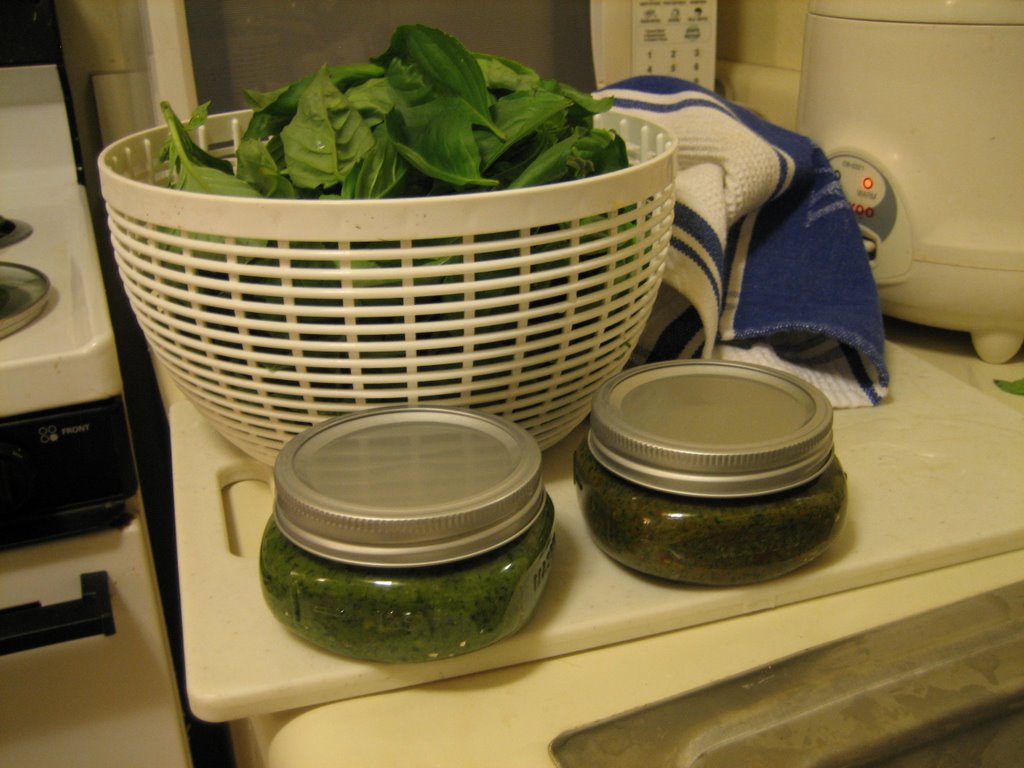
A little over a month ago I bought one of those "pony packs" of basil: six spindly plants, each a few inches tall. A month later, I'm wishing that I had spaced the plants several more inches apart. Each plant is now a few feet tall. Twice a week I snap off leaves just to prevent flowering. The result is something like the pile you see above - and this is AFTER I made two jars of pesto.

The jar on the left is a basil/parmesan/garlic/olive oil pesto. The one on the right is a sun-dried tomato basil pesto.

Yum!

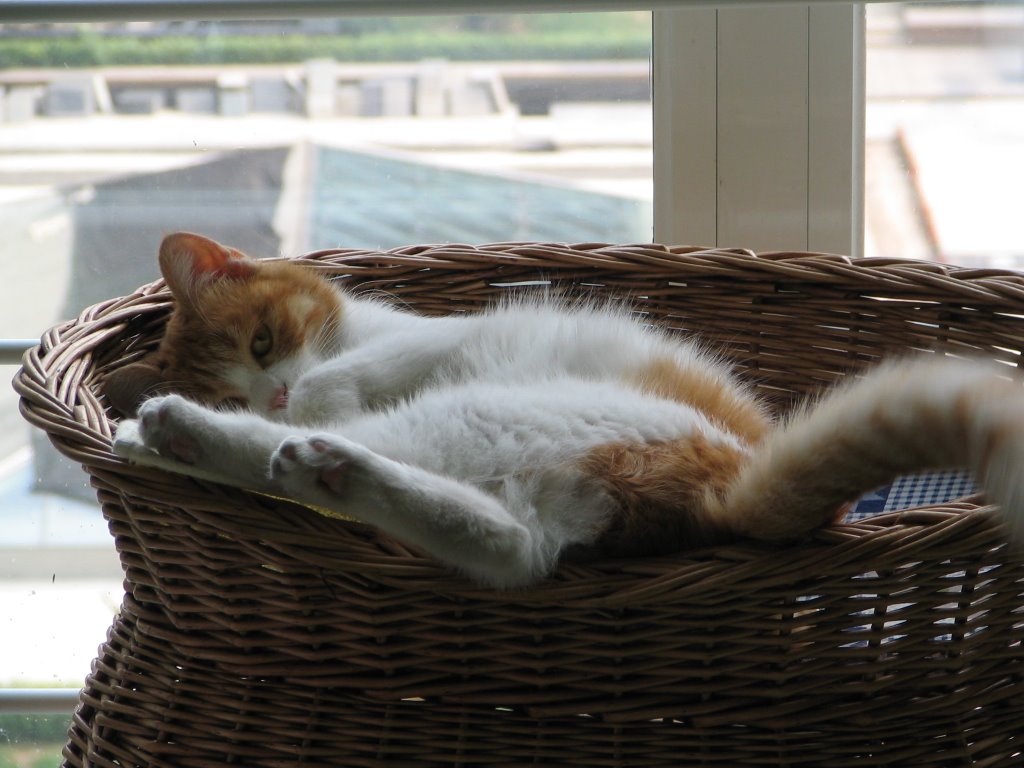
Meimei (photo courtesy of Jeremy in Beijing)

Wednesday, August 09, 2006

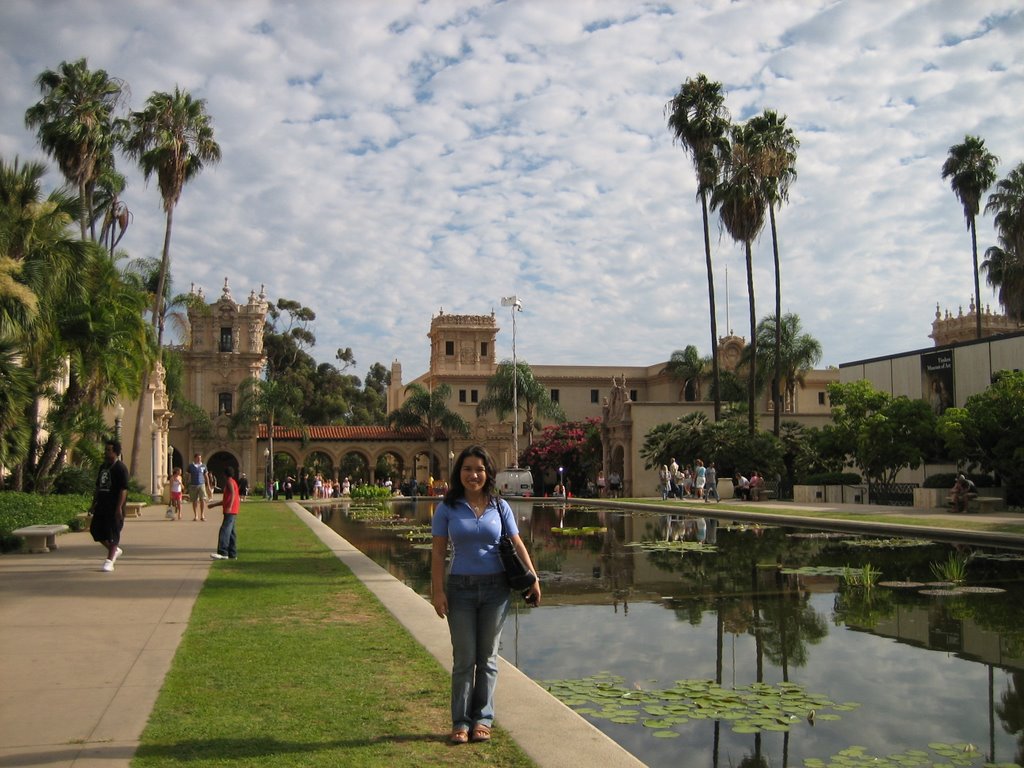
Back in gorgeous San Diego


I'm thrilled to be back in California. This was taken in Balboa Park.

Tuesday, July 25, 2006

Dashanzi exhibition


One of my favorite Chinese teachers invited me to see an exhibit of Cultural Revolution photographs - photographer at left.

Saturday, June 10, 2006

Photos from Guilin and Yangshuo

Photos from our trip to Guilin and Yangshuo, Guangxi Province (technically an autonomous region in southwest China)


River cruise from Guilin to Yangshuo


Terraced fields near Longsheng


Local women of the ethnic Zhuang people

Friday, June 02, 2006

Today, Beijing, tomorrow, Guilin!

Jeremy's parents arrived on Tuesday and after a quick trip to the Great Wall and other sights, the three of them went to Xi'an to see the terracotta soldiers. (I went in 2001 and was underwhelmed.) At my suggestion, we included Guilin on the itinerary for some magnificent scenery - limestone cliffs like you've never seen. Pictures to follow when we return on the 7th.